Sunday, April 13, 2014

A weekend for the birds! (Part 1)


The list of things to start/finish is immense, but sometimes life gives you a wonderful surprise and you just have to set the list aside, and enjoy the gift. On the afternoon of Friday, March 28, I was sitting at the kitchen table with friends Becca and Jill, when Jill shouted for us to look out the window “Hawk! Owl! Squirrel! No owl! Look!”


Sure enough, a Northern Saw-whet Owl (Aegolius acadicus) was perched on a branch, a mere 10 feet from the dining room window. Here in northern Minnesota there are found year round, but as they are A) nocturnal  B) small (7-8” tall)  C) have feathers that aid with camouflage, they can be difficult to see. Thus, this saw-whet was a lifer for me. (Lifer: (noun) A bird when it is first seen and positively identified by a birder).

Now I have already seen wild Saw-whet owls up at Hawk Ridge in Duluth during their fall owl banding. I volunteered during the daytime at the Ridge, and was also able to help with their night owl program, which provided the opportunity for the following photo! (Fall 2012)


I digress. I did not count the Hawk Ridge Saw-whet as a lifer, as it was caught in a net (versus being seen naturally in the wild). So this Saw-whet out our back window was a big deal! From roughly 4:30 to 8:00 pm (when it decided to fly off), this owl was the focus our attention. We saw it poop several (3) times, and also cough up a pellet (which I later went out and retrieved – a future blog post of its own). Our graduate friend Clinton came over (a hardcore birder) and this owl was also a lifer for him!

The Saw-whet for the most part remained motionless. At times it would turn its head to look at the squirrels that were scampering around in the tree. A few times the owl changed which foot it was perching on (the other drawn up into the body of feathers to help stay warm). Most of my experience birding in Minnesota has been in the winter, when you are generally standing outside in below freezing temperatures. I regret never spending too much time hanging around watching a particular bird. This evening however was perfect:


Saturday, April 5, 2014

Snow day bread baking

Looking at the online weather report Thursday night (April 3), it was certain that the snow would continue, and looking out the window, the storm seemed to be living up to the predicted 8-10” of snow. Waking up Friday morning, the snowpocalypse was still continuing outside. I woke up early in anticipation of having to catch the bus and go to work, but a call from my supervisor allowed me to keep the PJs on, and head on into the kitchen.

My ideal snow day activity? Baking. More specifically today it was baking Julia Child’s White Sandwich Bread with a recipe from the “Dinner with Julie” blog.


1/2 cup warm water, 1 Tbsp. yeast, 1 Tbsp. sugar = a foaming success! 


The dough getting ready to rise

 Some 2 hours later…


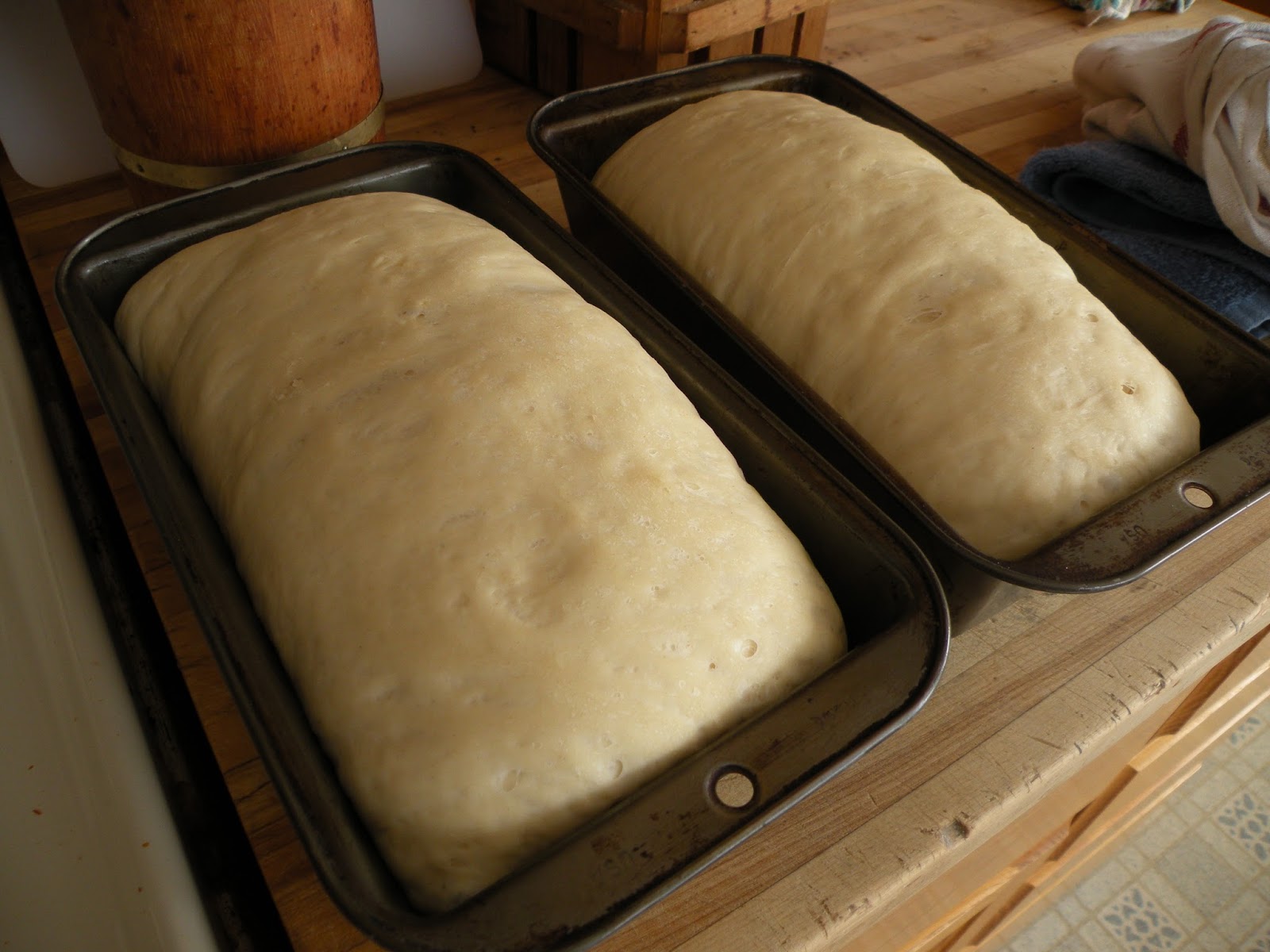
After punching the dough down, I split it into two and flattened the pieces into sheets, folded them into thirds, and laid them seam down in the buttered bread tins.  Time to rise once more!

    Before  & After 

The smells involved with baking bread take me back to my Grandmother's kitchen. I remember readying the yeast in the glass measuring cup, balancing the cup on the edge of the red counter next to the sink, where there wasn't quite enough space but that's where my Grandma put it, so, balance. I remember licking the sticky dough off my hands before washing them, just after kneading the dough for the first time. I also remember the time we shaped the dough into a teddy bear. And of course, the smell when the bread comes out of the oven… a time machine to the past.


By the time the bread was finished and a slice of bread (or two) with butter was had, the sun was shining, the wind slowed, and the resulting 9.4"of snow was waiting outside to be shoveled. Happy Spring!


Friday, July 19, 2013

Blink of an eye

Another NPS Yosemite blog post in the books!  Enjoy!

Eating lunch at Taft Point (a lovely overlook reached by a trail leaving from Glacier Point Road), my favorite bird paid me a visit. A large, black bird with an inquisitive nature, the common raven (Corvus corax) is a frequent visitor to campgrounds, picnic areas, and picturesque overlooks. While the raven kept an eye on my peanut butter and jelly sandwich, I caught the raven's eye on film.

Like most vertebrates, birds have eyelids that they close while preening or sleeping. But their eyes also have another protective shield, a nictitating membrane! This additional "eyelid" sweeps over the eye sideways, from the corner of the eye closet to the beak across to the outside corner, functioning to keep the eyeball moist and clear of dust. The membrane can also be useful during flying as it is translucent, still allowing the bird to see!

You know the little pink nub in the corner of your eye? It's actually an evolutionary remnant of the nictitating membrane, no longer functioning as it does for birds.

Although dust may get into our eyes, these ravens are set for a patient perch at a blustery overlook, staying on the look out for leftover lunch. So keep your food close, or it may disappear in the blink of an eye!


Wednesday, June 19, 2013

Orange Peels in the Forest?

On my recent excursion up to the high country, I went hiking to Harden Lake and found a familiar fungus, Orange Peel fungus.  I first identified these little gems in Northern Minnesota and was happy to see a familiar sight here in California.  I wrote up the following note which was posted on the NPS Ranger Note website for Yosemite National Park.  Find below the written post or click the following link to take you to the official Yosemite blog website:

Yosemite Ranger Notes


Hiking along a trail in the White Wolf area, to my surprise I saw an orange peel on the forest floor! Did someone litter? No, it wasn't the discarded shell from a delicious fruit we know well, but a cup-shaped fungus growing upward from the ground.
Orange peel fungus (Aleuria aurantia) usually grows in clusters on the ground, often in wooded areas near rotting trees and dead matter. They can be easy to miss, generally ranging in size from 1 to 2.5 inches (3-6 cm), but can reach up to 4 inches (10 cm) in diameter. They are found throughout North America, and are common during summer and fall. This fungus is a decomposer of dead organic material, returning nutrients such as hydrogen, carbon, and nitrogen back into the soil to be used by other plants.
The forest floor is "littered" with a variety of mushrooms/fungus, colorful gems dotting the ground, helping to recycle nutrients. So while out hiking, be sure to Leave No Trace, and pack out all of what you packed in, and let it be that the only orange peels in the forest will be of the fungus variety.

Friday, June 14, 2013

The beauty of Brick Stitch!


Once again, I saw a pair of earrings online (these were beaded), and decided to make myself a pair. Welcome to the new hobby of creating Brick Stich beaded earrings!

Open up 10+ windows of step by step instructions on E-how.com and off to the races! (no internet at home, so if I want to view a website… need to open them ALL up).  The first earring was a little rough, but the second one to complete the pair went much smoother, and looks much better (to my eye at least).  Point to remember: glass beads will break if you try to jam through a needle and thread that aren’t meant for such tiny work.  Where is the closest bead/craft store to Yosemite?


And the following, obviously not Brick Stitch, but another recently made, wire woven pair of Dream Catcher earrings:


Without access to internet, lack of TV, limited cell service, it is amazing at the level of creativity that can spring forth.  Between hiking, crafting, and work, it has been an enriching first month here in California!